.png)
Travel
Day 2: A mesmerising world of birds
A day in Bharatpur Bird Sanctuary

Sleep was hard to come by. The thought of the early start kept things restless for a while. Got up yet again short on slee, but with the kind of quiet excitement that comes from knowing you're about to see something the city never offers.
As instructed, at the gates by 6:15 AM. Rinkesh was already there. A host who keeps his word is, as it turns out, the first good sign of a day going right.
Keoladeo Ghana National Park, also known as the Bharatpur Bird Sanctuary, sits about a kilometre from the farm. The name itself carries something worth pausing on: Keoladeo is Kevladev in Hindi, taken from a Shiva temple inside the sanctuary. Kevladev translates to Keval ek hi Mahadev - there is only one Shiva. A wildlife sanctuary named after a god. That kind of layering is easy to miss if you don't stop to ask.
The gates hadn't opened yet. While sorting camera gear outside, Rinkesh had already sorted the entry pass for the day. There are three ways to explore the park - cycle, electric rickshaw, or on foot. Walking seemed like the right call. The best way to soak in everything around. What wasn't fully appreciated then was just how much ground that decision committed to.
The gates opened at 7:00 AM. The day began with a camera over one shoulder, a water bottle and an extra lens on the back.
Keoladeo felt hushed in the morning light. The first bird calls filtered through the trees, echoing softly across the wetlands. Over the next twelve hours, the sanctuary unfolded at walking pace - forested trails, marshes, open stretches, and the kind of silence that cities have mostly forgotten.
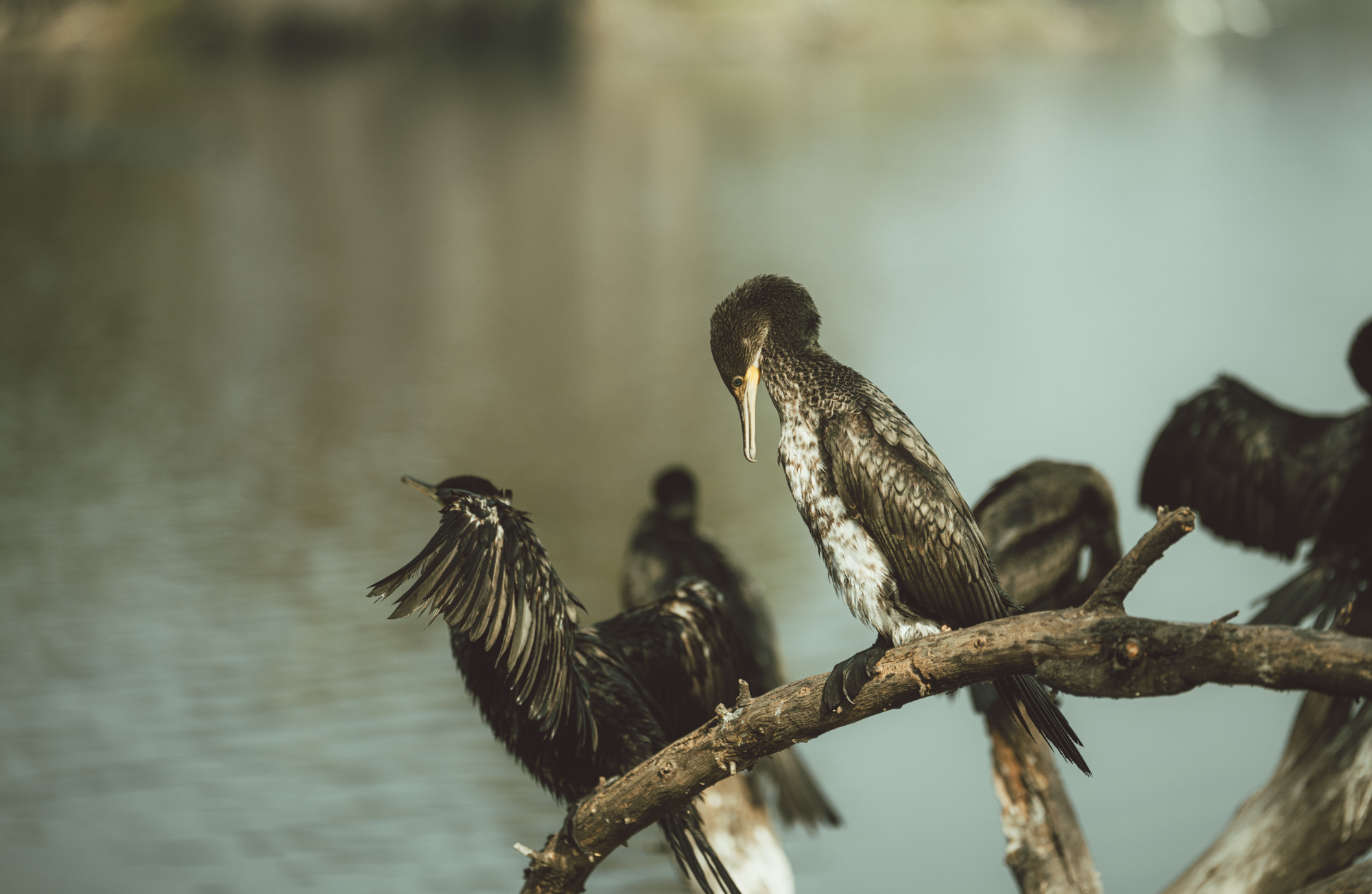
A jackal slipped through the reeds, there and gone. Sambar deer grazed at the water's edge, unbothered. Spotted deer moved through the trees. Nilgai appeared in the open grassland and disappeared just as quietly.
The day belonged to the sanctuary.

Two birders from Agra joined the trail briefly. Their zoom lenses were the size of small telescopes. Between stretches of silent walking, a few easy exchanges about sightings, routes, and travel made the day feel shared rather than solitary. The kind of conversation that only happens when two people are both paying attention to the same thing.
By the time I reached the gates again, it was 6:15 PM. The step counter read 28,157. Over 3,200 calories burned. though it felt like considerably more. Tired to the core, Rinkesh saw it and arranged for a scooter ride till the gate, a km from the inner gate.
Getting on the scooter proved difficult in itself as the legs had tired so much and muscles had given away. Somehow I got on it and thanks to a local staffer for waiting and giving me a ride. Dropped me near the parking.
Walked back to the car, and sat for some time not just to catch my breath but thinking: steps are fine to count, taking an e-rickshaw would have been even better.
Back at the farm, tea was waiting. It tasted better than tea has any right to after a day like that. Dinner followed: bajra chapati, jeera rice, palak paneer, curd, and fresh salad. Simple food, cooked fresh by Rinkesh's mother. Exactly what the body needed.
Bags were packed for the next day while thinking about where to go next. Another short drive was what made sense after the day's effort. The decision came just before sleep did.