.png)
Travel
Day 28: The Last Jyotirlinga, a Memorial, Floating stone of Dhanushkodi & the Best Sunset!
Visit to Ramanathaswamy Temple, Dr. Kalam's Memorial and Dhanuskodi

Morning at the Temple
The day began early.
A quick bath and I headed straight to the temple. This was the final Jyotirlinga of the journey — the last one I would visit on this trip.
Since taking the car was not an option, took help from the hotel guards who could let the auto driver know the destination; away we were.
A small act of local help that made the morning start well.
Ramanathaswamy Temple
Reached the temple, removed the footwear. Met a priest at the entrance who explained the visit, the sequence of rituals, the offerings, and the fee. With that settled, the morning became his to guide.
The Ramanathaswamy temple is one of the twelve Jyotirlingas, one of the four Dhams of Hindu pilgrimage, and home to one of the longest temple corridors in the world. The corridors alone are worth the visit, long colonnaded passages with intricately carved pillars that create a rhythm of light and shadow as you walk them.
We moved through the temple together. As we walked, he explained the history of the temple, the significance of the rituals, and guided me through the queues so the process moved smoothly.
Along the way, brief conversations happened with two other visitors in the group. An Andhra man based in the US, and a couple from Delhi, the husband a wholesaler of dry fruits and spices, their children in tow. Strangers at a pilgrimage site, thrown together by the same morning and the same purpose. The kind of connection that a temple route produces naturally and an itinerary cannot plan for.
The Twenty-Two Sacred Kunds
The defining ritual at Ramanathaswamy is the bathing at the 22 theerthas, sacred water tanks within the temple complex. Each kund has its own name and significance.
Since the kunds are deep wells, one cannot bathe on their own. The temple sevaks stand on the edges and pull water from the kunds using small vessel and then pour it over the pilgrims.
The priest took us through all 22, one after another. By the time the last one was done, the clothes were completely soaked and the body had been through something that felt genuinely different from a temple visit. Earned rather than observed.
Stayed for the opening aarti, which takes place in two parts: first for the general deity, then for the presiding god. Its an amazing experience witnessing the aarti at the jyotirlingas with an added flavour of the South Indian culture.
Had a pooja performed for the family, a part of the package. Many others were also getting one or the other Pooja performed at a designated area in the temple complex.
Post the pooja, a little photoshoot by the pandit ji since I was not carrying my phone. The famous columns of the temple created a fairy wings effect as the morning light filtered through those columns.
Gave whatever money was in my pocket as dakshina, which would have been much more than what they had asked for at the start.
A Small Realisation
As I stepped outside, something struck me.
Almost everyone around was carrying small containers filled with water collected from the temple kunds. I had completely forgotten to collect any. And by then re-entering the temple wasn’t possible.
When I mentioned it to the priests, they asked which hotel I was staying in and then readily offered a practical solution - they would deliver to the hotel themselves. They asked for the quantity, five litres was it I said. .
With that done, I started back to the hotel. That's when another realisation hit. I had given all the money, wasn't carrying my phone and hence, there was no way I could pay any auto. Walked back the distance to the hotel - a good morning walk of a km and a half.
Back at the hotel for breakfast and a long rest.
A Promise Kept
Just as I was getting ready to step out again, got a call from the priest.
Two priests from the temple had arrived with a five-litre can of the sacred water, exactly as promised.
One of those small gestures that quietly stays with you. Some things on this trip had arranged themselves. This felt like one of them.
Tucked away the jerry can in the car boot and drove to the first destination of the afternoon.
Dr. Abdul Kalam Memorial
Rameshwaram is the birthplace of Dr. APJ Abdul Kalam, scientist, missile programme director, and the eleventh President of India. Beloved in a way that few public figures manage to sustain beyond their lifetime. The memorial to him is here, in the town where he was born.
It was hot outside. Shoes off at the entrance, stepped into the hall. No mobiles, no photography allowed.
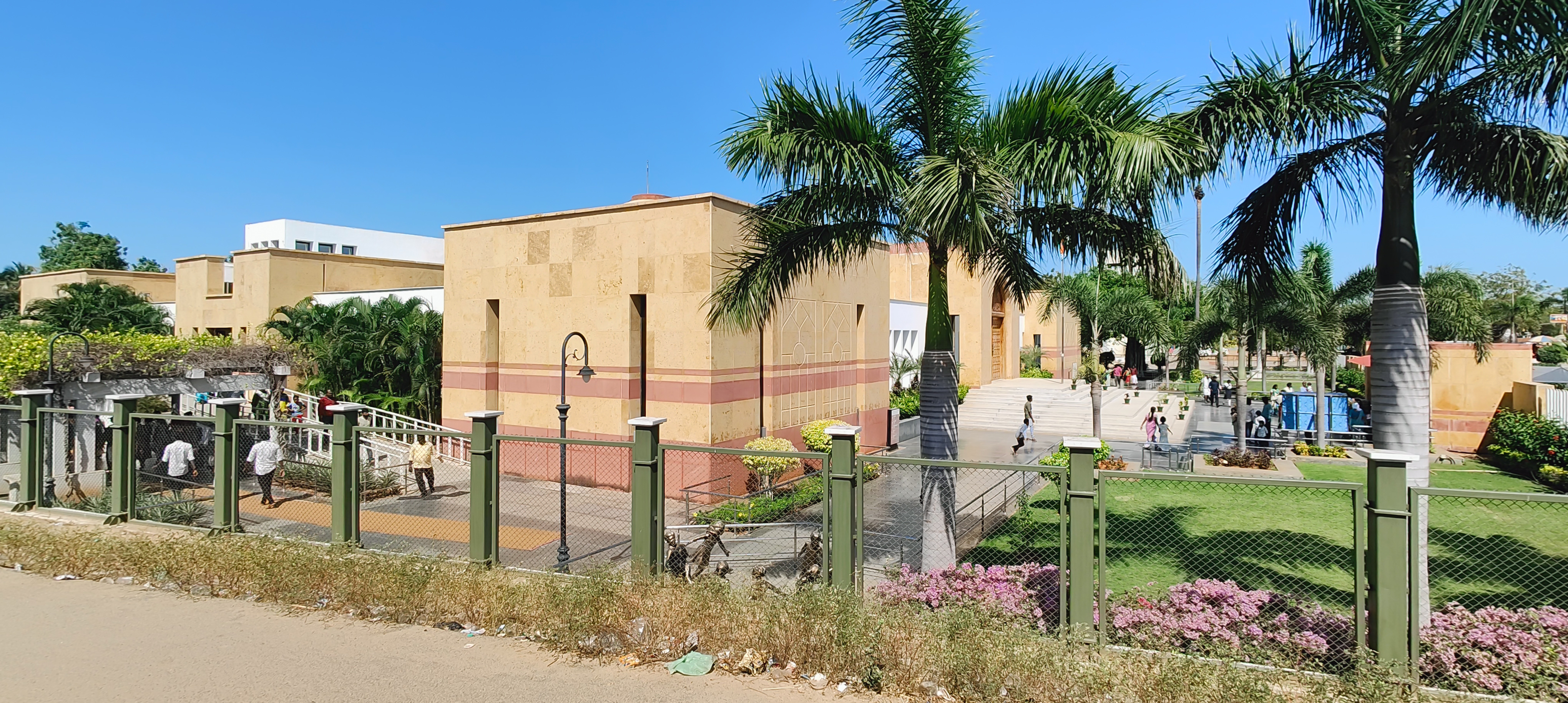
What was inside stopped me before I had fully taken in the room.
A life-size sculpture of Dr. Kalam, seated at his desk, in the exact posture and bearing familiar from decades of photographs. The detail of the work was extraordinary. The face, the hands, the slight forward lean of someone engaged with something on the desk in front of him. For a moment, and it was genuinely a full moment, the mind refused the fact that it was not real. Not a statue in the way that most memorials produce, but something that held the actual presence of the person.
Stood there longer than expected. Left feeling something that is hard to name precisely but sits somewhere between gratitude and loss.
Towards Dhanushkodi
Past the city lanes, a short winding road, and then the landscape changed completely. The drive itself is unforgettable.
The road narrowed until there was water on both sides. The Bay of Bengal on one side, the Indian Ocean on the other, a strip of land between them barely wide enough for the road itself. This is Dhanushkodi, the easternmost point of Rameswaram island and the closest point on the Indian mainland to Sri Lanka. In the Ramayana, this is the place from which Ram crossed the sea with his army to Lanka.
At the Edge of the Land
Dhanushkodi carries deep mythological significance as its believed to be the place from where Lord Ram’s bridge to Lanka began.
And to show it, a few locals had telescopes set up, offering distant views of a Sri Lankan island. A man also had a floating stone tied to a rope, demonstrating that the stones here genuinely float. The same type of stone said to have been used to build the bridge by the Ram's vaanar army across the sea.
The tip was crowded. Autorickshaws, taxis, and private vehicles had created a slow jam at the end of the road. Found a parking space, left the car, and walked to the point.
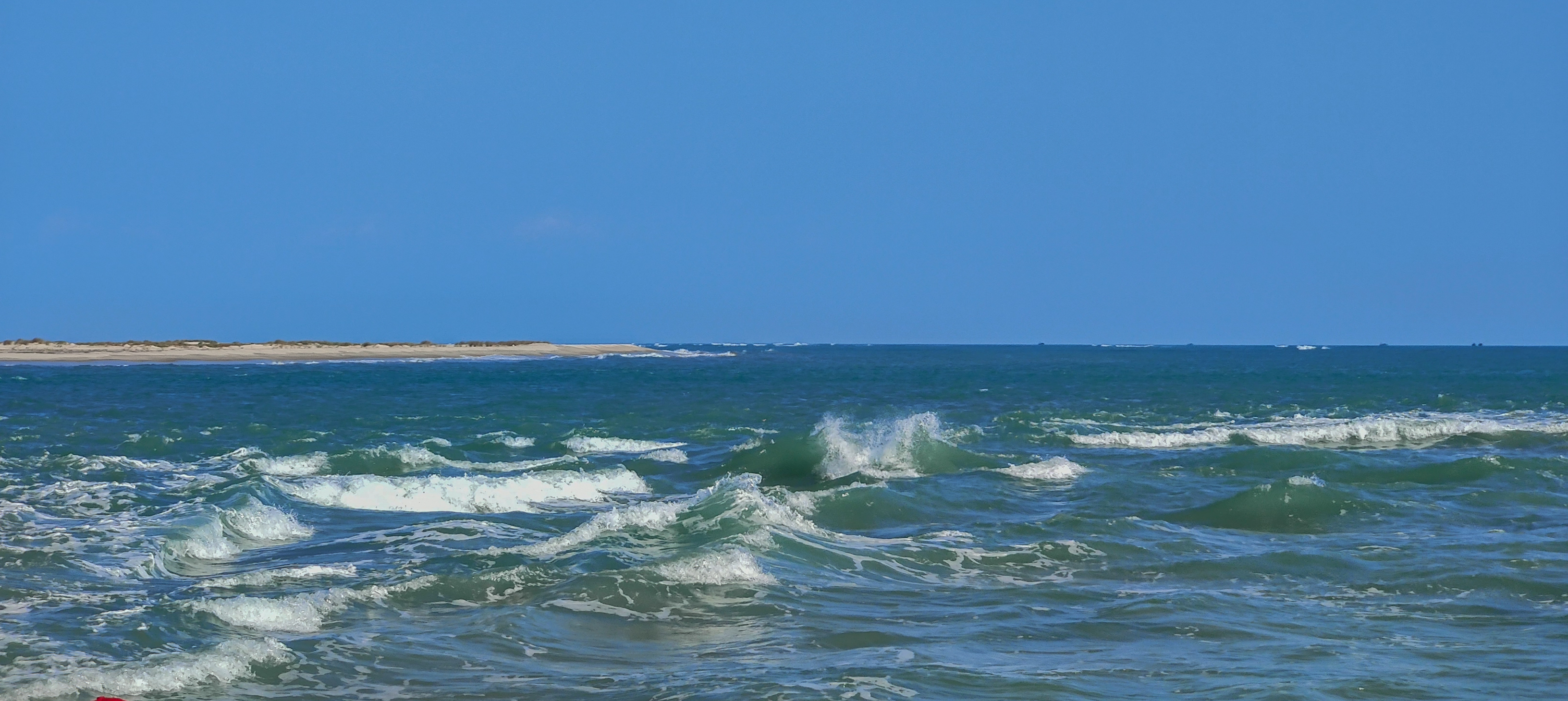
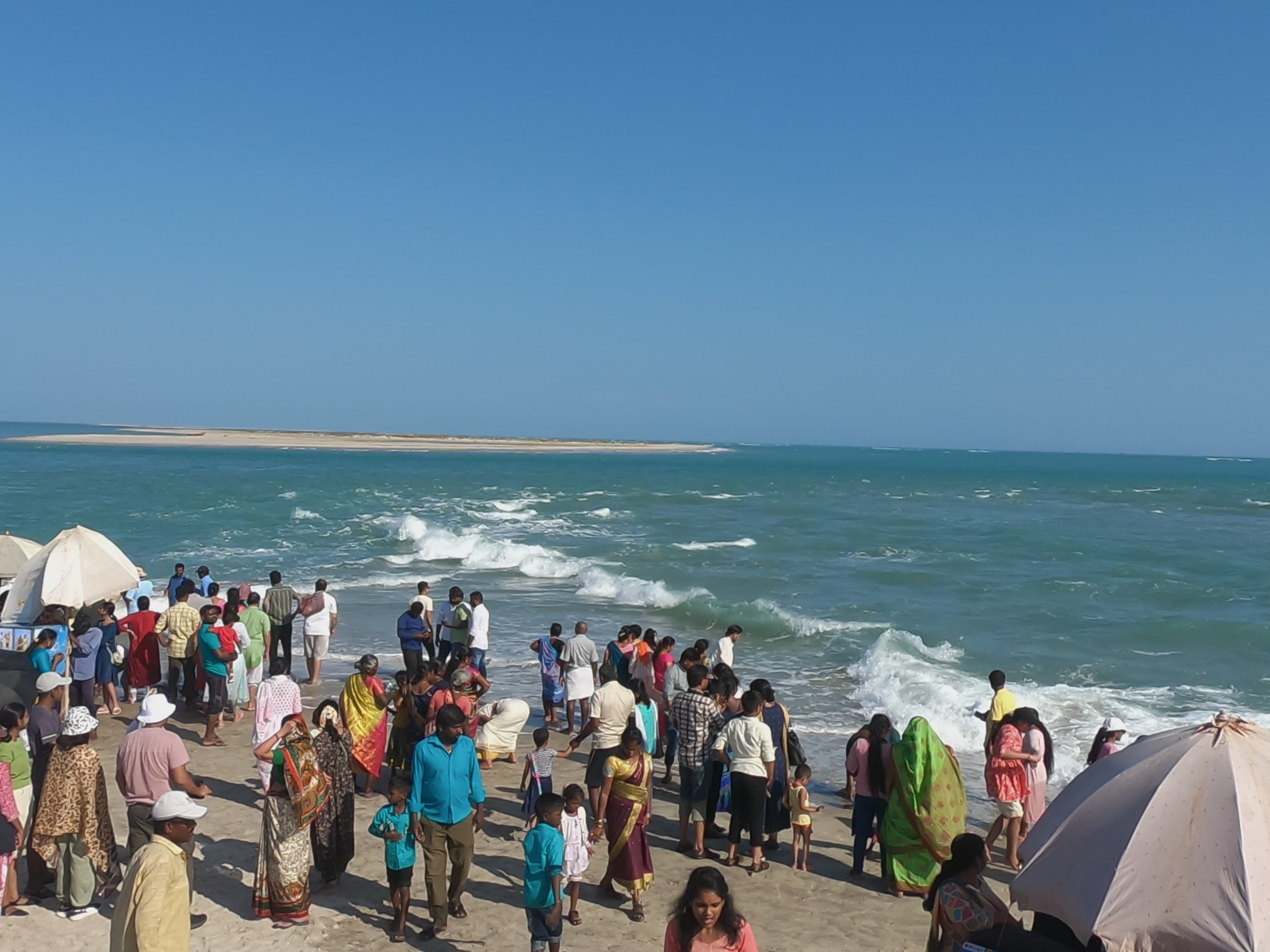
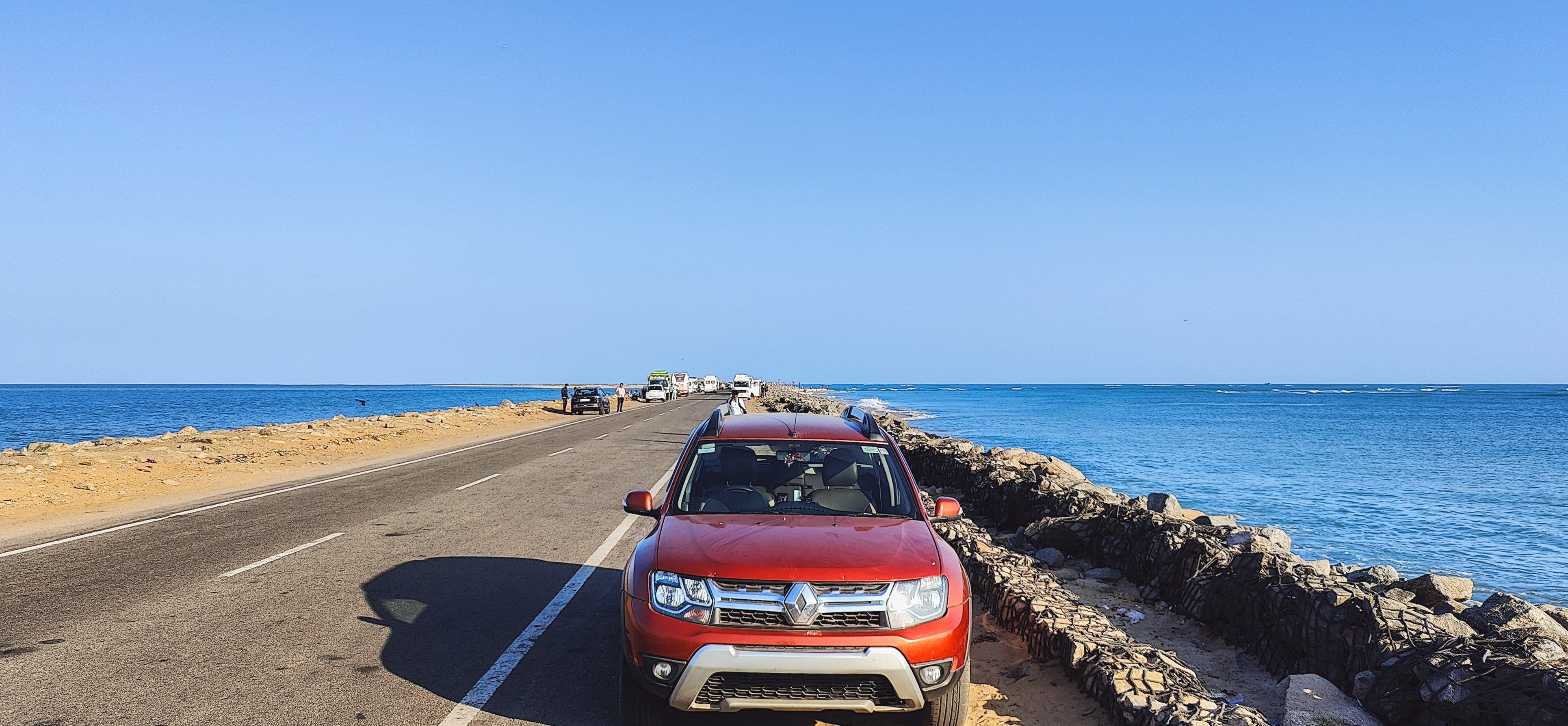
A small crowd had gathered around the man holding the floating stone, some curious, some already convinced. The telescope that stood nearby offered views of a Sri Lankan island though I gave it a miss. Would love to travel to the country some day.
Spent time walking the shoreline, photographing, letting the fact of being at this precise junction of geography and mythology settle in.
A lone monkey suddenly appeared on the scene, away from the crowded tip. Seeing him, it was sense of divine amusement given the significance of the place tied to Ramayana.
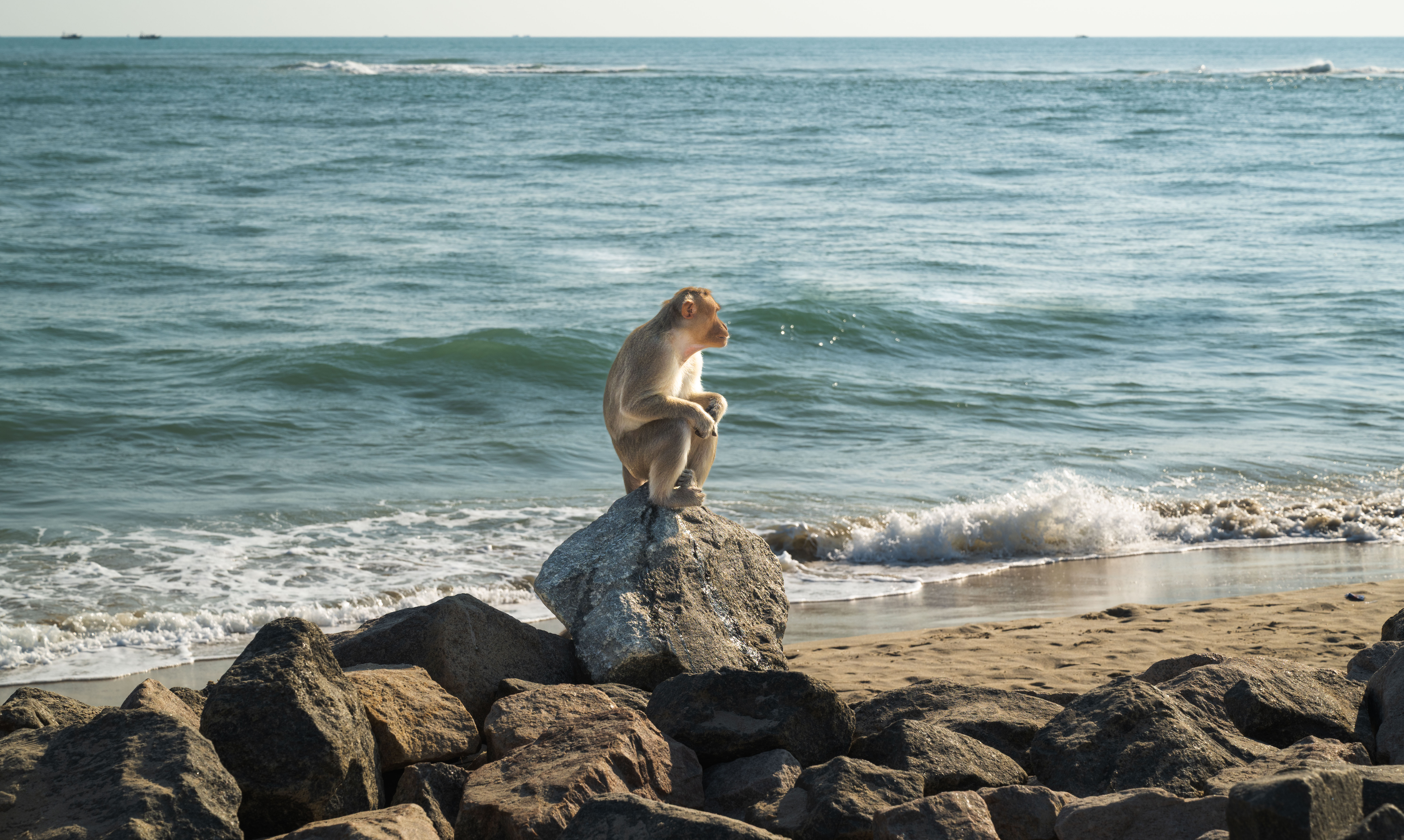
The site is beautiful and it really felt fulfilled having driven this long and across. The drive on the stretch of road with seas on both the sides, just soaking in the beauty of the nature, on foot, in car, an kilometre by kilometre.
The Village That the Storm Left Standing
Site seeing done, started the driver back from the tip however, was intrigued and at Dhanushkodi village on the same stretch.
The village, rather ruins of the old buildings, walls, arches, the skeleton of the old railway station, stand exactly where the devastating storm of 1963 left them, one of the most powerful storms to hit the Indian coast in the twentieth century. Weathered but still upright, the stone holding its shape against the salt air and the years tells the story of what was there.
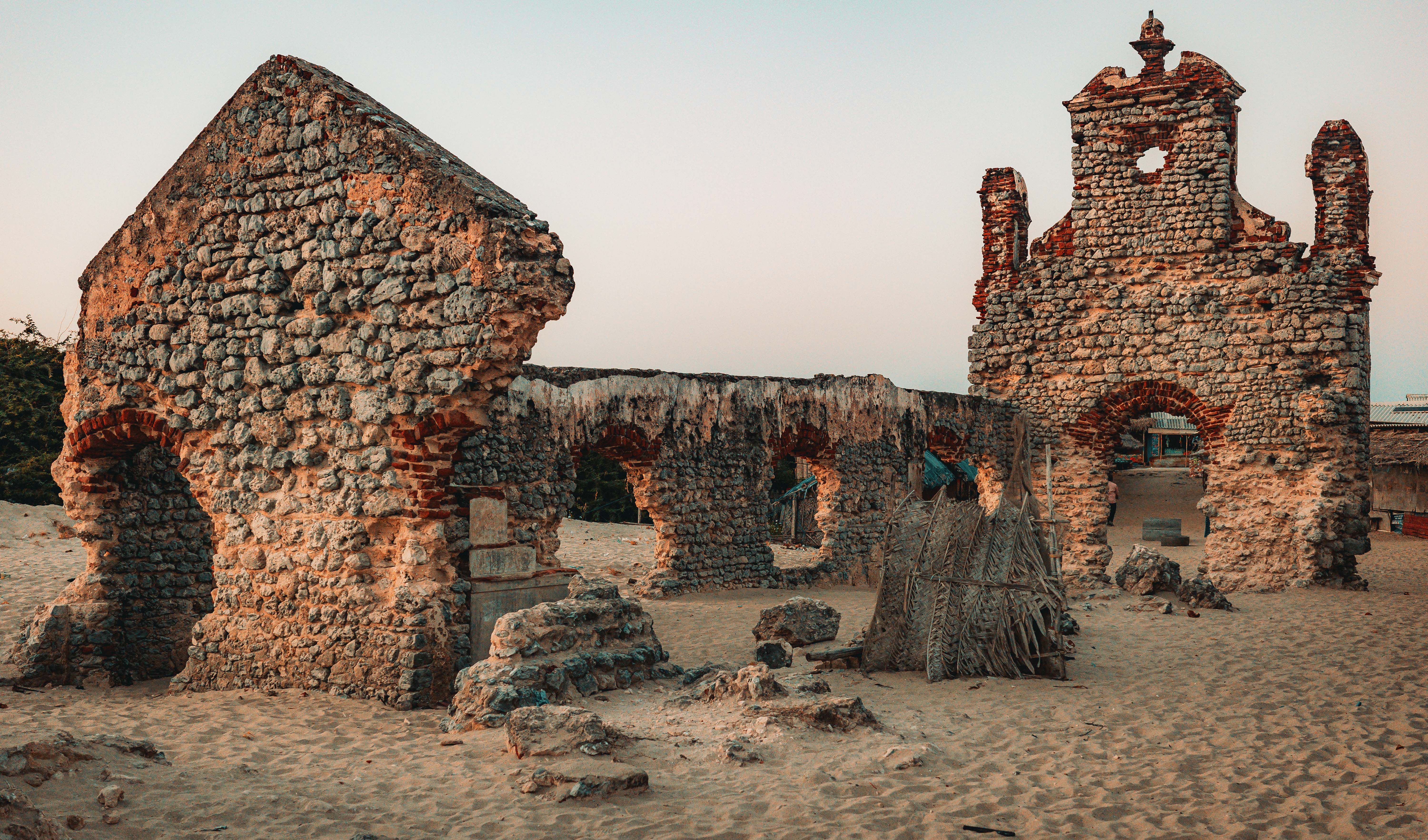
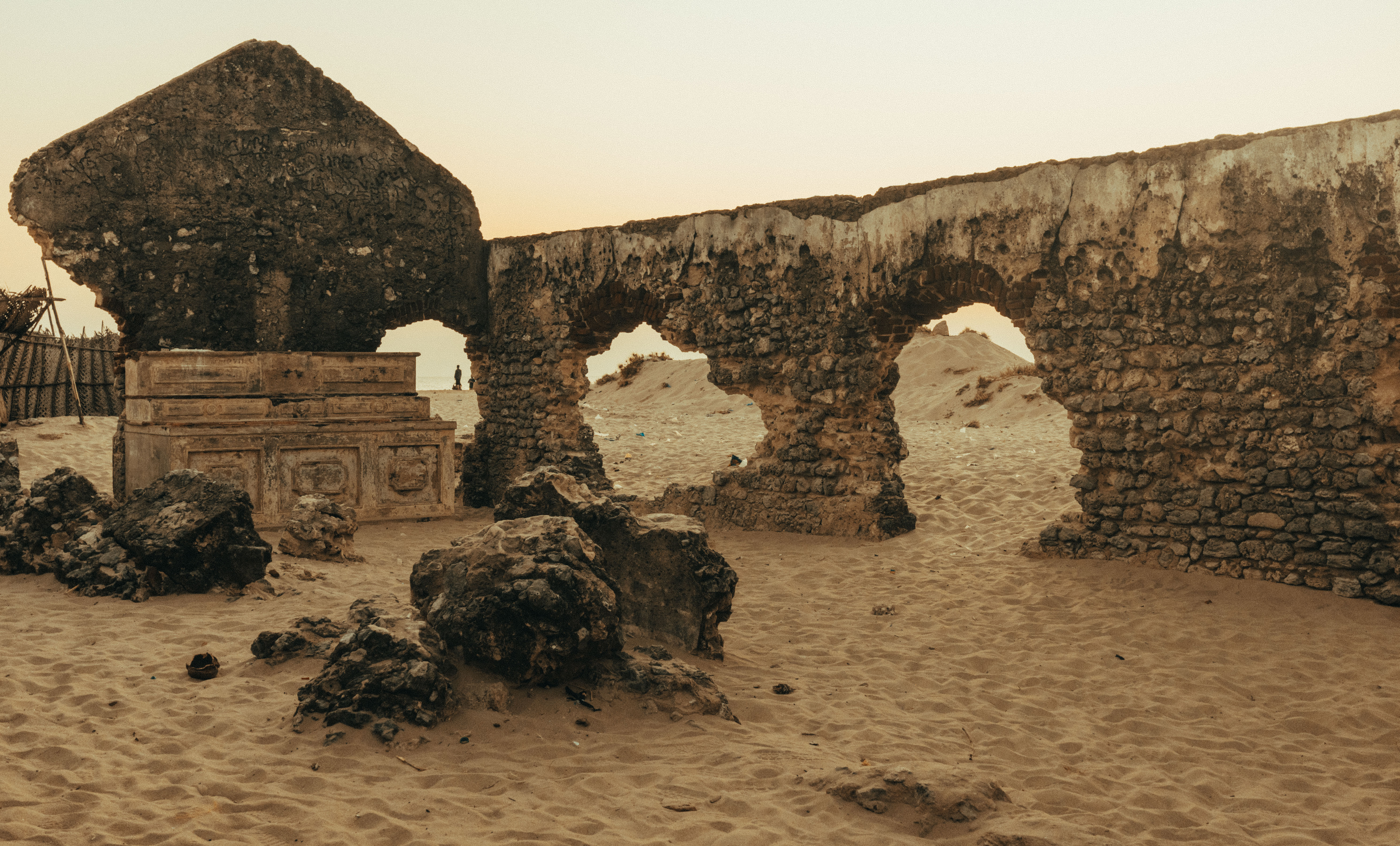
A village market operates in and around the ruins until sunset. Vendors selling shells, food, and trinkets between the old walls, the commerce of the living conducted among the remains of what was lost. When the sun goes down, the market empties as if on a signal. One moment people, the next an empty beach between broken walls and the sea.
The Sunset
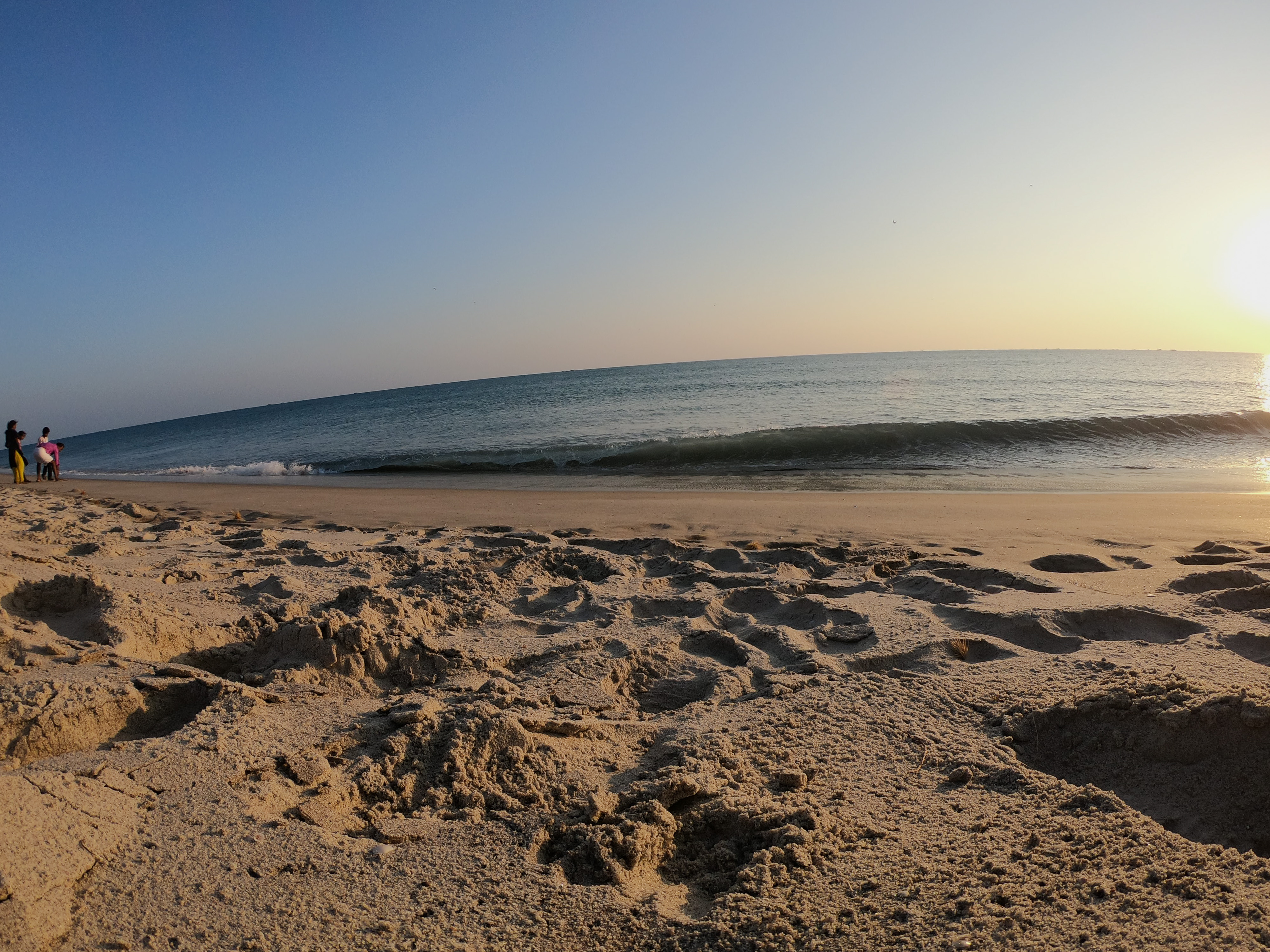
Walked towards the western edge of the village, a quite beach onto yourself, not many venture there post rising the tip. Had the beach almost empty.
Listening to the waves crashing on the shore and making a specific sound owing to the shape of the beach. It was like small crackers were bursting in series every time a large wave crashed against the beach.
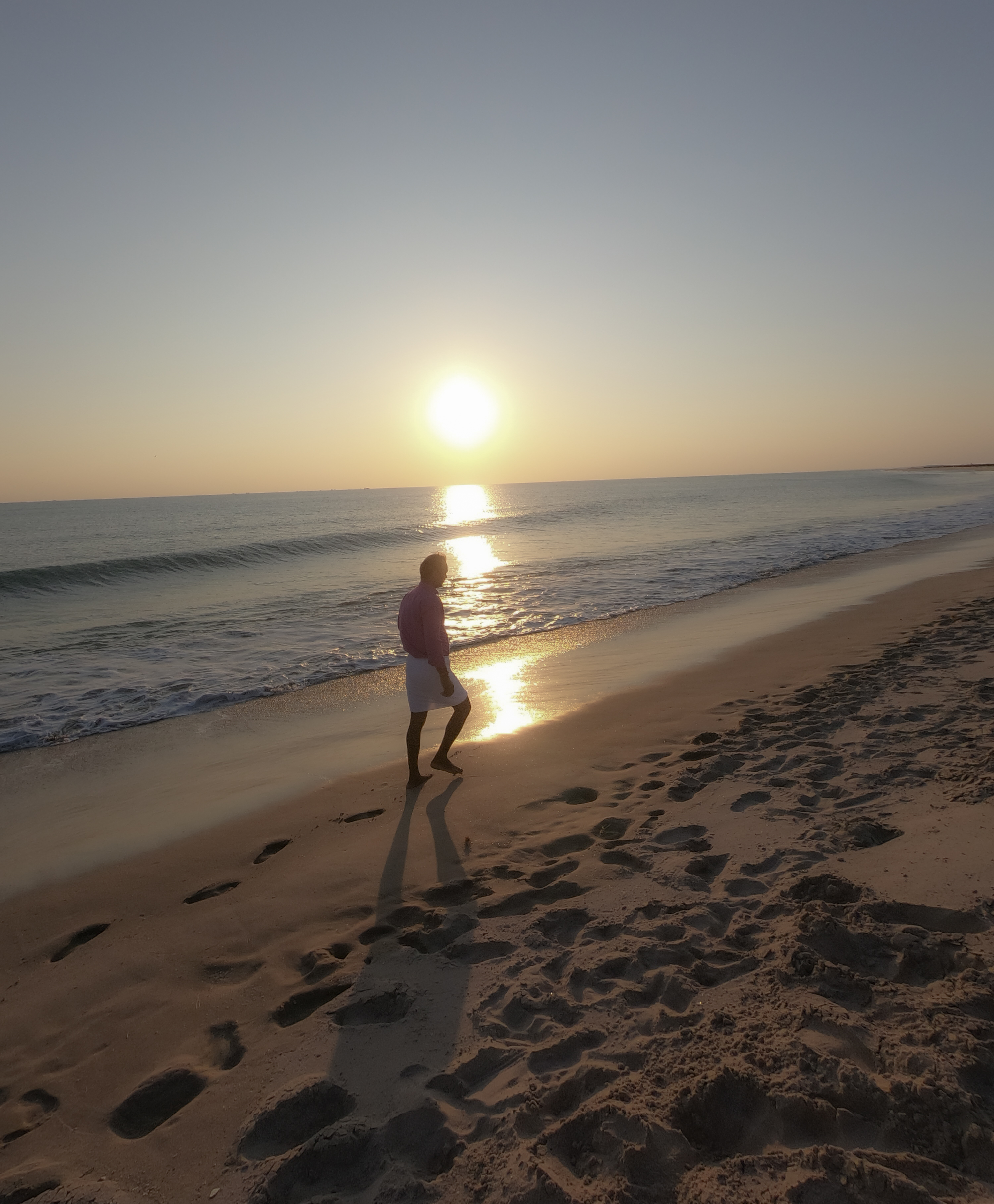
Spent the evening there witnessing the most beautiful oceanic sunset of my life and in the hind sight of the entire trip too. Slowly and gradually, the sun settled down on the surface of the sea.
Land had genuinely run out, giving the sunset a weight that a beach elsewhere doesn't carry. The light on the water was something that had been waiting to be seen for a long time.
Slowly dipping into the sea like a biscuit in tea, the glow on the surface turning darker as the circle changed to half and then to crescent. Vanishing fully soon after, it left the surface a darker halo of the recent crimson burn.
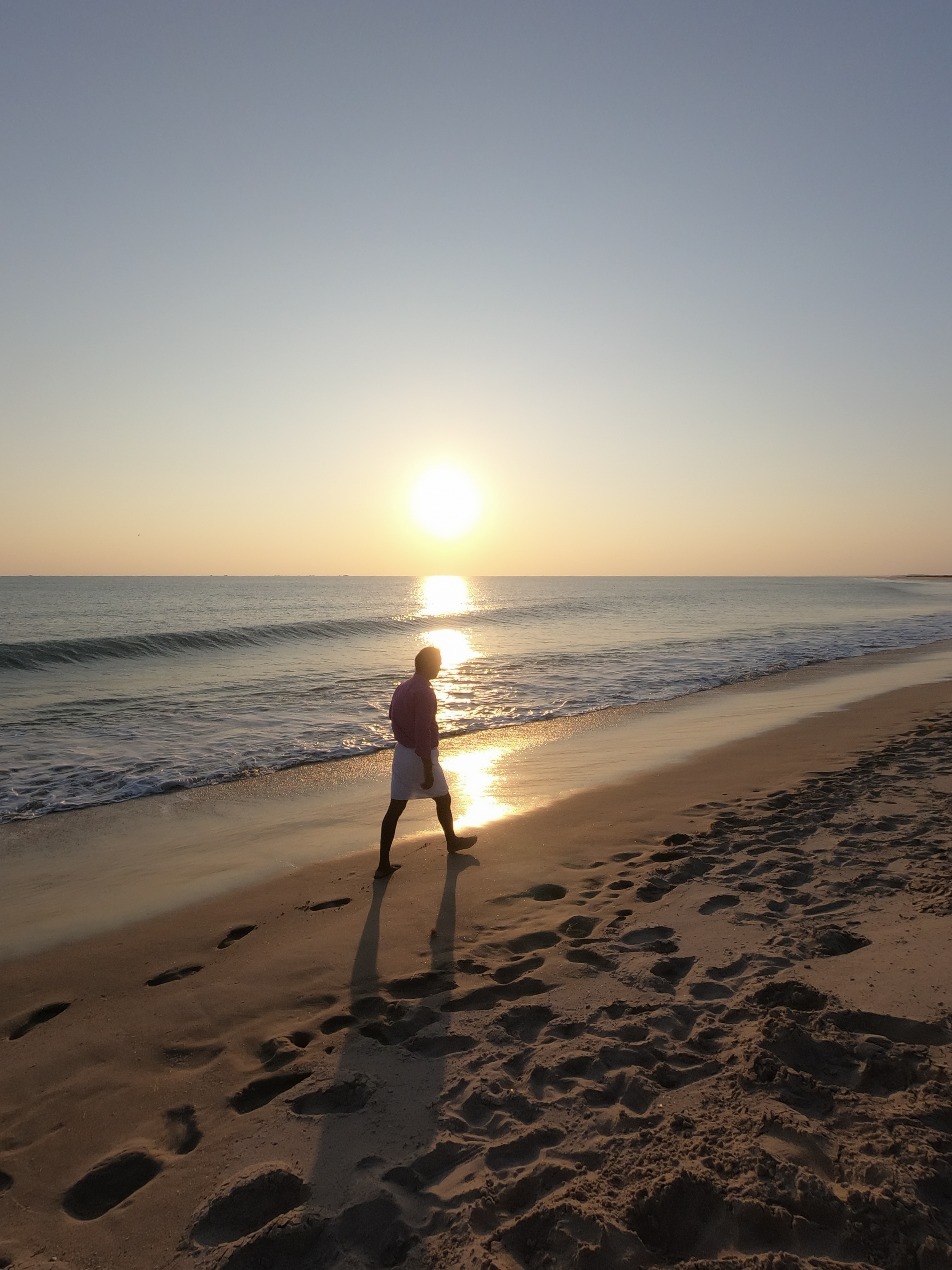
The nightfall would come fast and as I was about to leave for the car, saw some movement in the sand: Crabs! Two distinct crabs just ventured out and even before one could catch a good view of them, a group of kids came near and they vanished faster back into the sand faster than they had appeared out from it.
Walked back and stopped at coconut vendor, one of the few shops that had remained open as the last of the light went. He was about to shut shop too however, generously offered one final drink before he closes.
A drink at the sunset, it was time to drive back.
The server from Odisha
Drove back to the hotel as darkness settled over the island. Rested for a while, then went out for dinner. The previous evening's experience at the hotel restaurant had been enough of a reason to look elsewhere. The valet helped stop an auto and gave the driver directions to a local eatery in the area.
Walked around before settling on a small café-restaurant down one of the lanes.
The attendant was a young boy from Odisha, working far from home in a pilgrim town full of strangers. Not long after sitting down, a group at a nearby table began speaking sharply to him. The kind of sharpness that had nothing to do with anything he had done. He absorbed it without reacting, kept his composure, and continued working.
Treated him well. Spoke to him with the ordinary respect that every person doing their job deserves. He served the meal with an attentiveness and warmth that had nothing to do with training and everything to do with who he was. Tipped him before leaving. He smiled. That was enough.
Satisfied with food and that kid's smile, I walked back to the hotel.
It had been a long day: the final Jyotirlinga, the memory of Dr. Kalam, the edge of the land at Dhanushkodi, and a sunset that stayed in the mind long after it was over.
Now it was time to turn in for the night.